
This research, led by sex workers in collaboration with feminist academics, identified the challenges and opportunities they face online, as well as the safety and self-care strategies they develop individually and collectively.
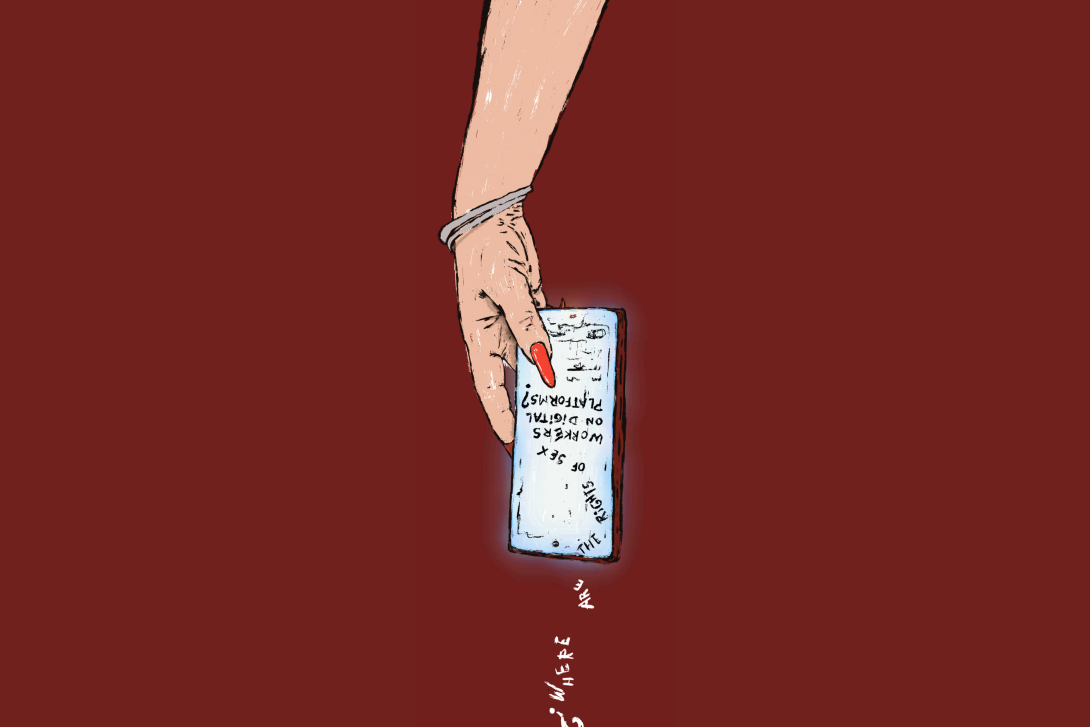
Uruguay occupies a unique position in Latin America as the only country to have formally regulated sex work. This regulation dates back to the nineteenth century, when sex workers were treated primarily as vectors of disease to be controlled through medical and police surveillance. While the presence of such legal frameworks may suggest a progressive orientation toward both sex work, as this study demonstrates, the realities faced by sex workers in Uruguay are marked by stigma, exploitation and structural exclusion, including in digital spaces, the focus of this study.
This research builds on global debates about technology-facilitated gender-based violence (TFGBV), the gig economy and digital rights. Sex workers’ experiences shed light on how neoliberal logics of entrepreneurship and personal branding intersect with long-standing social stigmas to produce unique vulnerabilities. At the same time, sex workers’ strategies of resistance and solidarity illustrate the creativity and resilience with which marginalised groups negotiate hostile environments. The study provides not only an empirical account of sex workers’ experiences in Uruguay but also a critical reflection on how digital rights must be reconceptualised to include those most excluded from state and corporate protections.
Methodology
This study employs 42 in-depth interviews based on a semi-structured questionnaire, administered an online survey answered by 55 respondents and interviewed seven experts. It was complemented by a review of relevant legislation, academic literature and comparative experiences in other contexts. The interviews were based on a semi-structured questionnaire and included participants from diverse gender identities, geographical areas and socioeconomic backgrounds. Particular attention was given to the participation of transgender individuals, who face heightened vulnerability due to global and regional persecution.
The research was led and implemented by sex-workers, producing a counternarrative to the hegemonic methodology imposed by academia. By foregrounding the lived experiences of sex workers, the study treats their knowledge as privileged, given their direct confrontation with the structures of exploitation, violence and stigmatisation. At the same time, the project avoided romanticisation by incorporating rigorous academic methods and expert perspectives to situate testimonies within broader legal, economic and technological contexts.
Key Findings
- The research highlights that sex workers increasingly rely on digital tools – particularly mobile phones, social media and classified websites – to organise their work and expand their options. Many interviewees emphasised the safety benefits of moving away from street-based work, including protection from weather, reduced exposure to violence and greater control over negotiations.
- Technology also exposes them to significant risks, particularly in the form of digital violence. The most pervasive concern raised in interviews was image-based violence. Almost all participants reported having photos or videos shared without consent. For some, the fear of exposure to family members, employers or future partners was constant, and in many cases, this fear materialised when acquaintances or clients circulated intimate content. Other types of digital violence include harassment and emotional abuse, threats and blackmail, real risk of physical violence, violation of privacy etc.
- The consequences could be devastating: damaged relationships, workplace stigmatisation and even estrangement from family members.
- Sex workers in Uruguay confront not only digital violence but also the structural disadvantages of a gig economy model that mirrors platforms like Uber. While digital platforms offer flexibility and independence, they ultimately impose precarity by framing sex work as “independent” entrepreneurship. This narrative shifts costs and risks from employers to workers, while denying them basic labour protections.
- Other than that, such digital labour practices also mirror broader dynamics of content-creation economies. Platforms oversaturated with competition demand constant self-promotion, which blurs boundaries between work and personal life.
- In the absence of meaningful protection from either state institutions or digital platforms, sex workers in Uruguay have developed diverse strategies of resistance – both individual and collective – to mitigate harm and ensure survival. Grassroots initiatives, such as Visión Nocturna and O.Tra.S., have carved out digital spaces for mutual aid, legal advice and campaigns against image-based violence, anchoring their work in solidarity and advocacy.
- Some has invoked intellectual property laws tactically; while others resort to physical retaliation or public exposure which are often criminalized under personal data protection or other laws. Alongside these defensive measures, sex workers employ both technological and behavioural strategies to reduce risk. Technology-based tactics include ephemeral messaging on WhatsApp, Telegram chats that warn of screenshots or preferring live video to images stored on client devices.
- Blocking is widely used to limit harassment, though participants noted its limits: blocked users can reappear with new numbers and blocking prevents sex workers from saving potentially crucial evidence. Behavioural strategies focus on concealment, such as avoiding identifiable features in photos, using pseudonyms or maintaining strict separation between professional and personal identities.