
Black women and gender non-conforming persons and technology-facilitated gender-based violence: A decolonial feminist exploration

This research examines how black women and gender non-conforming persons experience TFGBV differently due to historical and geopolitical factors, and how TFGBV is used to silence bloggers and journalists doing feminist work. With a decolonial feminist approach, the project aims to take a historically contextualised view on GBV, recognising patriarchy’s colonial roots within the context of South Africa and the African continent and actively resisting coloniality through knowledge production. The research employed both digital archiving methods and one-on-one narrative interviews and engaged in both communal and individual efforts to exercise critical reflexivity, acknowledging the power dynamics that exist within the research process by recognising our markers of intersectional identities and how they shape our theorising and retelling of the experiences of black women and gender non-conforming persons’.
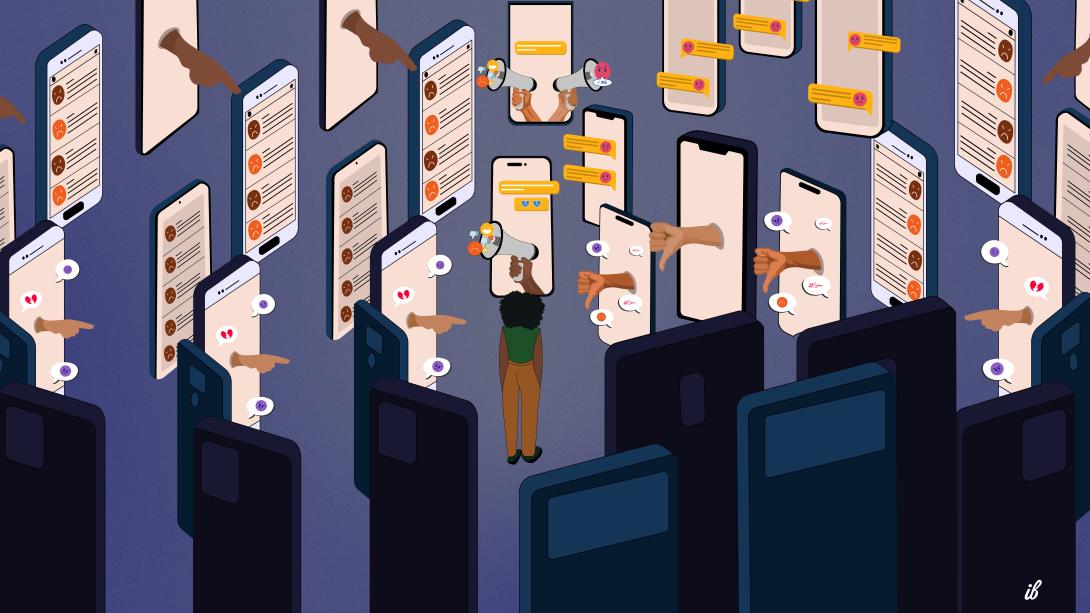
As gender-based violence (GBV) in South Africa has garnered a sense of national urgency, a great deal of research has been conducted exploring its permeation. Literature notably engages with GBV in its most violent and overt expressions, frequently magnifying narratives of its manifestations and the identities of those disproportionately affected by it. Other presentations of GBV, and everyday experiences of GBV, such as technology-facilitated gender-based violence (TFGBV), remain underexplored, especially in the South African context.
Technology-facilitated gender-based violence (TFGBV) is significantly under-researched in South Africa. Internationally, very little research on online forms of GBV adopts a more expansive, historical approach to the enactment of this violence. Furthermore, research on black women and gender non-conforming individuals’ experiences of online GBV is notably lacking. All these factors encourage interest in how online spaces are used to combat GBV, as well as what the experiences of online violence look like for marginalised groups.
This research addresses some of the gaps in the literature through contributions from two research projects: an honours research project on black women and gender non-conforming persons’ experiences of TFGBV on dating apps and a PhD research project on black African women and gender non-conforming journalists and bloggers’ experiences of TFGBV. The data presented in this project is drawn from these two projects. Both projects take a decolonial feminist approach, which aims to take a historically contextualised view on GBV, recognising patriarchy’s colonial roots within the context of South Africa and the African continent and actively resisting coloniality through knowledge production.
Methodology
This research employs a decolonial feminist theoretical framework. Decolonial feminism recognises the continuation of racialised and gendered oppression as the continuation of coloniality, centring patriarchy as a foundational principle of colonialism. Any work that seeks to be decolonial and feminist aims to resist this ongoing coloniality. We also used a storytelling, narrative approach that aligns with decolonial feminist aims, as it centres our participants' stories and lived experiences as knowledge, while allowing us to apply a historical, decolonial, and feminist lens to them. This framework allows the researcher to reshape how they understand the meaning and identity construction of Black women and gender non-conforming persons who continue to be disproportionately affected by all forms of GBV in South Africa.
The research employed both digital archiving methods and one-on-one narrative interviews. In general, and in alignment with a decolonial feminist approach to knowledge production, this research explores questions of power, politics, positionality, and identity. Across the process, we engaged in both communal and individual efforts to exercise critical reflexivity, acknowledging the power dynamics that exist within the research process by recognising our markers of intersectional identities and how they shape our theorising and retelling of the experiences of black women and gender non-conforming persons’. Through these approaches, we aimed to resist colonial silencing and erasure by foregrounding the agency and stories of those we worked with and by regarding them as expert knowledge producers on their experiences of GBV.
Key findings
- Participants’ stories show how, like with GBV, there is a normalisation and acceptance of TFGBV. Just as with offline GBV, there are underlying gendered, racial and patriarchal dynamics perpetuating violence against black women and gender non-conforming persons. The disregard that is experienced by those who report experiencing TFGBV is exacerbated by the fact that the police do not give these matters the attention warranted, as they are not classified as violence. Thus, like offline violence, injustice constructs online violence as normal because its effects are deemed intangible and thus not worth pursuing or simply unpunishable.
- Given the normalisation of violence online, it is no surprise that many respondents shared multiple dehumanising experiences. In their experiences of dating online, respondents recount how they feel sexualised and objectified. Their experience with violence is entangled with racism and the colonial imaginary of hyper-sexualised black women. This, coupled with the ways in which ownership is entangled with racism in the history of slavery, means that there is a sense in which black women’s bodies are thought of as available, due to black women’s presumed hyper-sexualisation.
- The online space is one in which the fetishisation of black women, documented in the colonial project, finds expression. In these ways, black women’s experiences online and in general society are distinctly shaped by their identities and by South African history. In important ways, it points to how whiteness and the Global North are not only complicit in ongoing patriarchy and coloniality in South Africa but are actively perpetrating it.
- These experiences of online violence have affected ways of interacting online that the participants deem safe, consequently often resulting in self-censorship as a protective measure. A constant anticipation of experiences of violence, combined with a lack of accountability for perpetrators, creates a hostile online environment. To navigate this, many participants censor the content they post on online platforms to avoid experiencing violence. Moreover, participants share the need to also monitor and restrict their movements offline in cases where violence progressed into the physical world.
- Speaking up against the violation of women is often met with scrutiny, and audiences seldom advocate for the perpetrator to be held accountable. Echoing this, the archival research demonstrates the continuation of violence and the delegitimisation of the voices of black women bloggers’ efforts to speak out about GBV. Rather than engaging in the prevalent issues of GBV, commenters derail the conversation by questioning the legitimacy of the claims and the motives for calling attention to GBV.