
The TransNET project: The role of intersectionality in shaping experiences of technology-facilitated gender-based violence among transgender, non-binary and gender-diverse persons in India
Adopting an intersectional and participatory approach, this research shows the stories of how 14 transgender, non-binary and gender-diverse people experience TFGBV, what strategies they employ to resist and safeguard themselves, and what barriers exist in accessing support. Crucially, the research addressed the underexplored terrain: the intricate ways TFGBV intersects with other marginalisations — caste, class, religion, disability, and region — within the Indian context. In return, how do these accounts for the complex ways in which these axes shape online precarity, safety and violence for TNBGD persons. By addressing the gaps, the researchers aim to generate knowledge that informs inclusive interventions, platform accountability and structural change for digital justice.
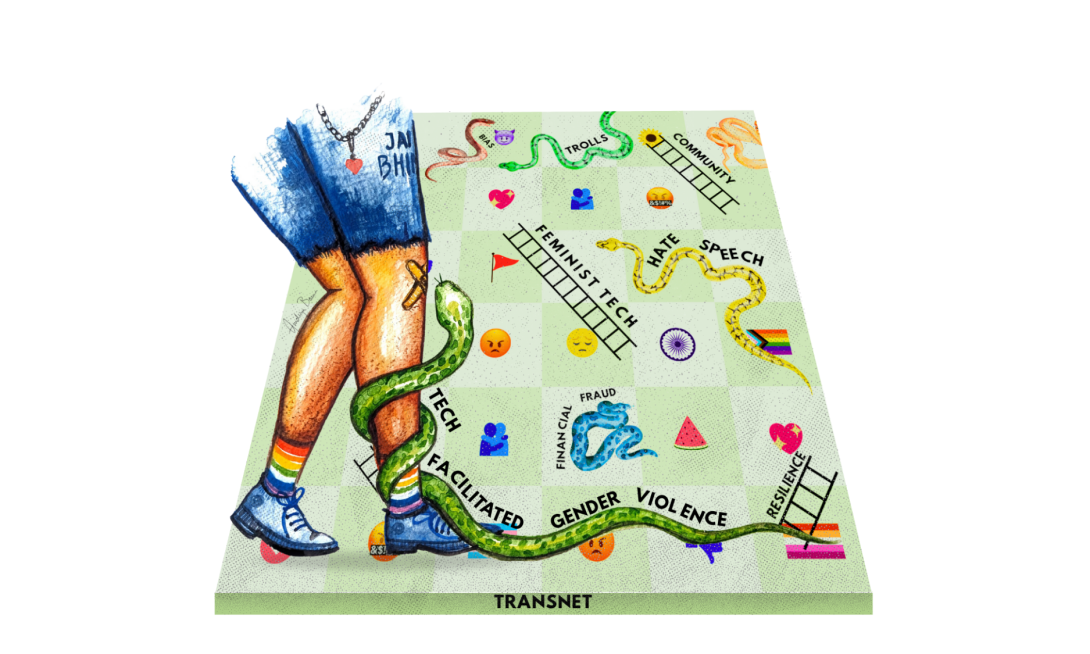
Across India, as in many parts of the world, transgender, non-binary and gender-diverse (TNBGD) people experience disproportionate levels of online harassment. These digital harms are not random; they amplify the inequalities already faced offline. A growing body of evidence highlights widespread experiences of doxxing, impersonation and online sexualised abuse among LGBTQIA+ persons, often escalating to threats of physical assault or death. Such harms undermine mental health, restrict freedom of expression and limit digital participation. Despite the scale of these challenges, legal and institutional responses remain inadequate.
What remains underexplored is how technology-facilitated gender-based violence (TFGBV) intersects with other marginalisations — caste, class, religion, disability, region — within the Indian context. Existing research rarely accounts for the complex ways in which these axes shape online precarity, safety and violence for TNBGD persons.
This study addresses that gap. By adopting an intersectional, participatory approach, the TransNET project examines how TNBGD persons in India experience TFGBV, what strategies they employ to resist and safeguard themselves, and what barriers exist in accessing support. In doing so, it aims to generate knowledge that informs inclusive interventions, platform accountability and structural change for digital justice.
Methodology
This study was grounded in a participatory, community-led approach, designed and implemented in close collaboration with TNBGD persons. The research team and the community advisory board included individuals from diverse backgrounds, many of whom had lived experiences of gender-based violence and/or of being TNBGD. This ensured that the process was not only inclusive but also guided by the expertise and priorities of those most affected.
Participatory practices included iterative consultations to develop the research questions, interview tools and reflection on the findings with community members. The researchers conducted 14 interviews with TNBGD persons across India via Zoom. This was followed by transcribing the interviews, as well as developing and revising themes and sub themes as part of the reflexive thematic analysis.
The methodological and theoretical choices were informed by four interrelated frameworks: intersectionality theory, queer theory, the minority stress model and feminist standpoint theory. Taken together, these frameworks do not stand in isolation. Instead, they intersect: intersectionality and queer theory reveal the structural and identity-based dimensions of TFGBV, while the minority stress model and feminist standpoint theory help interpret both the psychological consequences and the epistemic value of centring marginalised voices. The combination of these perspectives created a holistic analytical frame that is both structurally attentive and grounded in lived realities.
Key Findings
- The reports illustrated the different types of violence experienced by participants, including monitoring and surveillance of their use of technology with the intent to control them, stalking, doxxing, nonconsensual image recording, sharing and generating, as well as incidents of dating violence, sexual harassment and queerphobia. Forms of violence often overlapped or served as precursors to each other.
- Within LGBTQIA+ communities, cancel culture was often weaponised against vulnerable TNBGD persons. Cancel culture, which originated in Black digital spaces as a tool of accountability against those with structural power, has since escaped its context and is now being used within marginalised communities to silence or exile community members who are perceived to cause harm or discomfort
- A unique aspect of the violence encountered by TNBGD persons through technology was the policing and erasure of their gender identities and expression. This ties in with literature that suggests that violence is employed as a tool to regulate “deviant” expressions of gender and reinforce hierarchies of and essentialisms about sexuality, gender and sexed bodies, even within LGBTQIA+ communities.
- Not all forms of violence were explicit or directly experienced. Participants opened up about the impact of violence they witnessed other people going through —vicarious violence – and they also talked about more subtle, implicit forms of violence that were often seen in acts of omission or changes in behaviour toward them.
- The violence was often targeted at TNBGD persons’ most visible forms of marginalisation or difference, whether this was their gender identity, as seen in previous reports, or their religious beliefs, caste background, disability, profession, ethnicity or political affiliation. Those who perpetrated the violence included members of dominant religious and caste groups, family members, other LGBTQIA+ community members, people on dating apps, professional acquaintances and more.
- The impact of TFGBV encompassed several aspects of TNBGD persons’ lives, corroborating findings from existing studies and frameworks. One participant lost access to housing and education, and a few others were financially impacted or faced a loss of livelihood and professional opportunities. Many felt socially isolated from their family members, friends and communities, and also felt that their access to digital spaces and online communities and freedom to express themselves there were limited. Fear was a predominant effect of the violence, whether this was fear of being recognised in person, fear of being doxed or stalked, fear of expressing one’s opinions or beliefs, or fear of violent threats being carried out. TNBGD persons also experienced depression, hopelessness, self-loathing, and self-harm or suicidal thoughts as a result of the violence.
- Regardless, TNBGD persons employed a combination of different strategies to respond to violence and navigate barriers to support and resistance. Everyday safeguarding practices included being selective, conscious and strategic about what they share online. Particularly, in the Indian context where many participants straddle the complexities of coming out and staying closeted in order to manage safety in different social contexts, creating anonymous accounts with chosen names allowed a closeted transwoman to evade family surveillance, connect with other queer-trans people and explore her identity.
- In response to incidences of TFGBV, participants employed a blend of platform-based negotiations like reporting (individual and mass reporting), blocking and temporary deactivation and reaching out for psychosocial and economic support to friends, community members, siblings, therapists, mental health facilities, peer support groups and NGOs and CBOs.
- The findings highlight that in the absence of platform accountability and structural support, the onus of navigating TFGBV has been shifted to survivors who continue to experience the immense psychosocial, health and economic costs of this violence. Despite this, trans individuals and communities are constantly reinventing resistance, solidarity and safety in the socio-technological every day.