
Experiences of technology-facilitated gender-based violence (TFGBV) on online dating apps and social media platforms among university students in South Africa
This research investigated university students’ understanding and experiences regarding TFGBV on social media and online dating platforms in South Africa. The study employed a mixed-method design to generate evidence-based data to analyse participants’ understanding and experiences regarding TFGBV on social media and online dating platforms. Data was collected through surveys and focus group discussions to examine how South African youth navigate digital spaces and the associated risks involved in building intimate relationships and forming identities. The findings of the research highlighted TFGBV remains largely underreported, and many lack the language to describe what they experienced or witnessed online, and this is further compounded by the stigma and cultural of persistent silence around online dating.
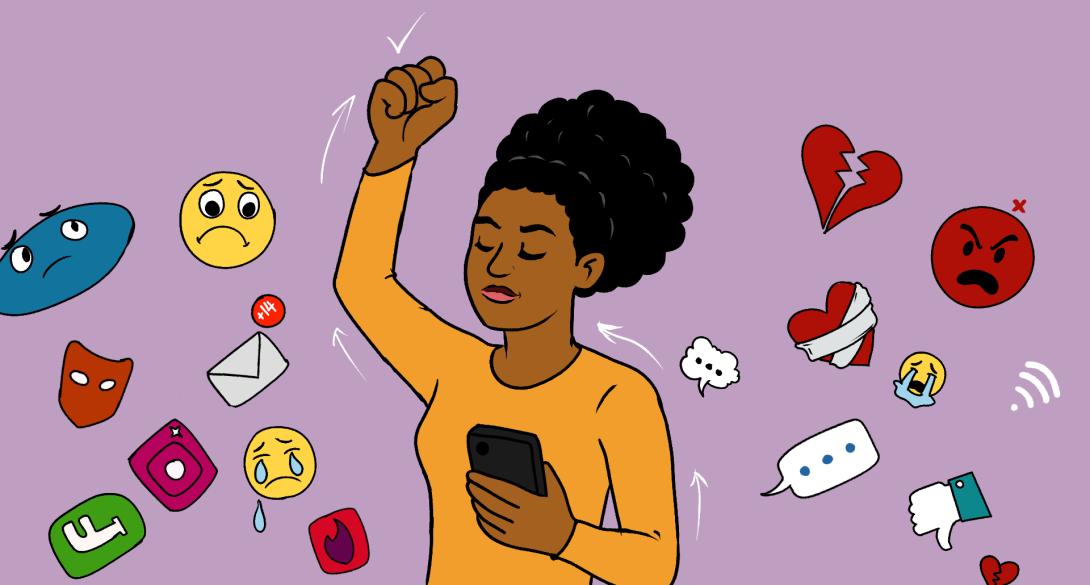
Globally, youth increasingly turn to digital platforms for connection. In South Africa, this phenomenon was apparent on platforms like MXit (now defunct), and more recently Facebook and WhatsApp as dominant channels for youth communication and interactions. However, social media’s evolution from networking to relationship-building has normalised digital intimacy while obscuring risks exacerbated by anonymity, deception and increasing vulnerabilities for abuse due to heightened trust and emotional investments.
Over the years, several South African universities have documented rising TFGBV cases linked to dating, the growing adoption of social media apps and its possible association with technology-facilitated gender-based violence (TFGBV). The rise of online dating apps such as Tinder, Bumble and OKCupid as well as social media platforms such as WhatsApp, Facebook and Instagram, has fundamentally altered how students form and maintain intimate relationships as well as create environments where anonymity, accessibility and virality facilitate various forms of TFGBV. However, the fear and stigma associated with reporting TFGBV may have contributed to its under-reporting and the persistence of a culture of silence.
Methodology
This research was conducted at four higher education institutions in South Africa: the Independent Institute of Education, the University of the Witwatersrand, North-West University, and the University of KwaZulu-Natal. The study employed a mixed method design to generate evidence-based data to analyse participants’ understanding and experiences regarding technology-facilitated gender-based violence on social media and online dating platforms. Data was collected through surveys and focus group discussions to examine how South African youth navigate digital spaces and the associated risks involved in building intimate relationships and forming identities.
Purposive and snowball sampling methods were used to reach a broad range of students for an online survey. Participants were over 18 years of age and enrolled in one of the selected campuses. Probability sampling was not feasible due to the logistical challenges and privacy restrictions imposed by the South African Protection of Personal Information Act (POPI Act). After a thorough cleaning process of the data (which involved removing incomplete, duplicate, and invalid responses), 620 responses out of 721 were deemed complete and valid for statistical analysis.
Participants for the focus group discussions (FGDs) were selected through purposive sampling to ensure diversity in gender, age, academic level and experiences, adhering to ethical and institutional requirements. Data was recorded on phones and laptops and transcribed using Sonix.ai. In the analysis, aspects of participants’ sexuality were only mentioned if, in their responses, they publicly made their identities known. Research assistants noted racial and gender differences, and these were included in the qualitative analysis.
Key findings
- The most frequent forms of TFGBV indicated for both social media and online dating are sexually intrusive violations (receiving flirtatious or sexual messages, and unwanted requests for nude photos/videos or to livestream sexual acts) followed by online stalking. Other forms of TFGBV include online harassment, impersonation, and doxxing.
- Participants that represent the LGBTQ+ community indicated that they turn to social media and online dating due to their fear of physically expressing and revealing their sexual identities. Because many of them come from backgrounds where such identities are not acceptable or recognized, online platforms allow them to express their sexualities and meet other members of the LGBTQ+ community. However, their positionality makes them vulnerable to physical and emotional violence by perpetrators who use this information to exploit, expose, violate or intimidate them.
- Traditional stereotypes about single mothers create avenues for TFGBV. Being a single mother and looking for an intimate relationship online come with stereotypes shaped within patriarchal gender-based ideologies. Participants indicated that single mothers experience not only frustration at the notion that a woman with a child should want an intimate partner, but also the vulnerability that comes with exposing this information. This may attract misogynistic and derogatory comments from some male account holders.
- Participant responses suggest the fetishisation of the Black African woman’s body, speaking to the historical dehumanisation and sexual exploitation of the Black female body. This is a phenomenon with roots dating to the era of European exploration of Africa, a continent described as “virgin” and “uncivilised”, reinforcing the feminisation and sexualisation of the Black African female body as a commodity. European narratives, supported by distorted scientific claims, legitimised this notion, especially during the slave trade era and the subsequent colonisation of Africa and the apartheid oppression of South Africa.
- The quantitative survey indicated that respondents were less likely to share their online negative experiences. With 53% indicating that they did not, and 45% answering in the affirmative. Because of their search for love or desire to build a relationship online, participants expressed fear of social judgment from older members of their society as a major reason for not reporting their experiences of TFGBV.
- Underreporting of TFGBV is made worse because many participants were not aware of the term, TFGBV. They lacked the formal terminologies to describe what they were facing online. Their limited understanding of TFGBV makes it difficult for them to report the crime or provide evidence to authorities for further investigation.
- Finally, participants believed law enforcement agencies lack training and equipment to combat online crimes. For example, while law enforcement authorities such as the police routinely respond to crimes related to physical GBV such as rape, which they are familiar with, crimes such as non-consensual dissemination of intimate images or other TFGBV crimes are still regarded as grey areas and therefore dismissed or downplayed when reported.